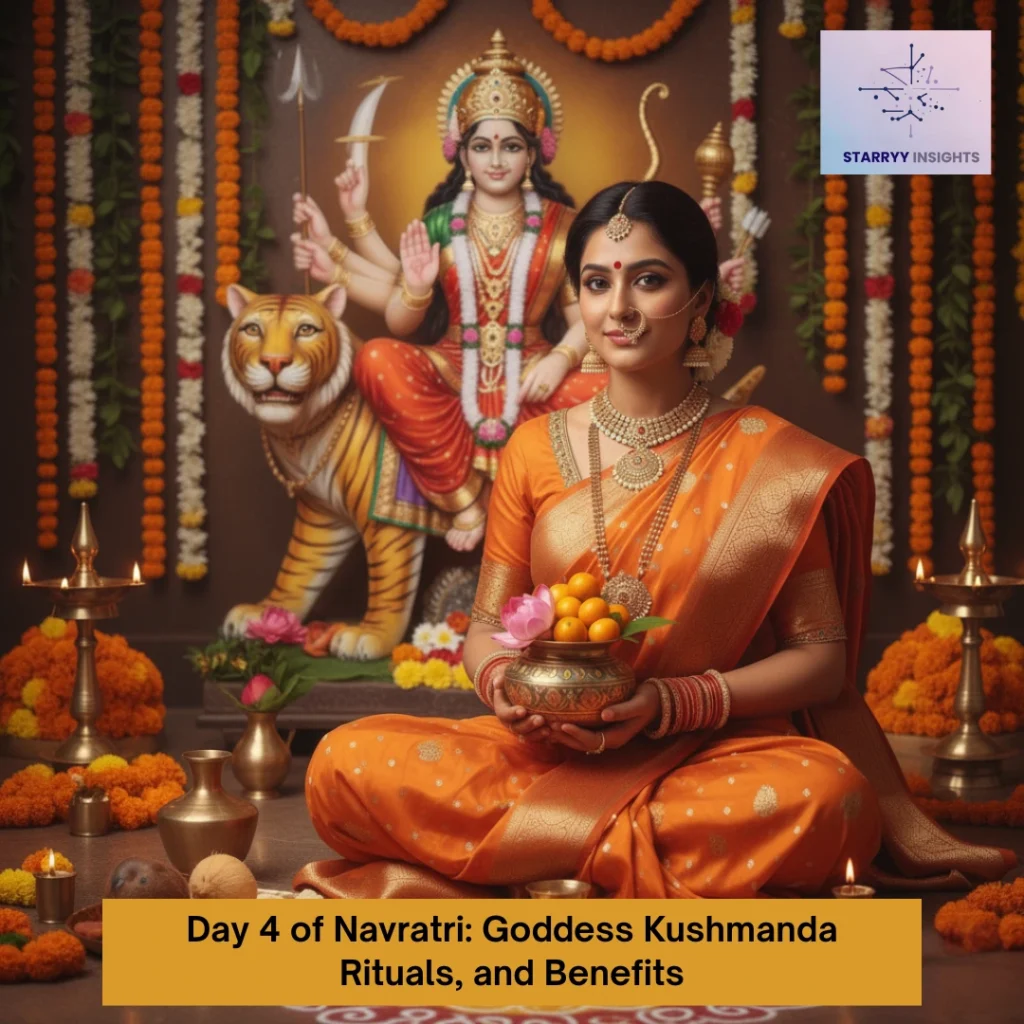

Navratri, the nine nights of worship dedicated to Goddess Durga and her forms, holds deep spiritual, cultural, and astrological significance. Each day is devoted to one particular manifestation of the Divine Mother. Day 4 of Navratri is dedicated to worshipping Goddess Kushmanda, also known as Ashtabhuja Devi. This day is considered highly auspicious for invoking strength, vitality, and inner radiance.
In this guide, we will explore the rituals, significance, related nakshatra, zodiac associations, and spiritual benefits of observing Day 4 of Navratri. Additionally, we uncover the symbolic meanings, mantras, vrat (fasting) rules, and how this day shapes human life spiritually and astrologically.
Significance of Day 4 of Navratri
On the fourth day of Navratri, devotees worship Goddess Kushmanda – whose name is derived from three core elements:
- “Ku” means little
- “Ushma” means warmth or energy
- “Anda” means cosmic egg
Together, “Kushmanda” translates to “the goddess who created the universe through the power of her smile.” Symbolically, she represents the origin of creation, energy, vitality, and cosmic balance.
Her divine form with eight hands, holding weapons, rosary, lotus, and a kalash, signifies both creation and protection. Worshipping her on Day 4 is associated with positivity, courage, and prosperity.
Rituals of Day 4 of Navratri
Devotees begin the fourth day with purity, devotion, and specific rituals to honor Goddess Kushmanda.
Step-by-step puja vidhi:
- Altar preparation: Place the idol or image of Goddess Kushmanda in the puja area decorated with flowers, kalash, incense sticks, and diyas.
- Offering flowers and fruits: Marigolds, garlands, and fresh fruits like pomegranates and coconuts are common offerings.
- Lighting lamps (deepak): Diyas filled with ghee are lit to symbolize light overcoming darkness.
- Chanting mantras: Devotees recite Kushmanda Devi mantras to invoke her blessings.
- Bhog: Malpua (sweet dish) is traditionally prepared as prasad and offered to the goddess.
- Fasting (vrat): Many devotees observe a fast, consuming only sattvic food like fruits, nuts, and milk.
The puja is performed during the Brahma Muhurta or auspicious timings of the day as per nakshatra and zodiac alignments.
Day 4 of Navratri and Nakshatra
During Navratri, each day aligns with certain nakshatras, adding astrological depth to its celebration.
On the fourth day, depending on the year, nakshatras such as Mrigashira, Chitra, or Swati may align, magnifying spiritual outcomes. These nakshatras are connected to energy, creativity, and balance.
- Mrigashira Nakshatra: Enhances curiosity, learning, and quest for knowledge.
- Chitra Nakshatra: Linked with creativity, intelligence, and problem-solving.
- Swati Nakshatra: Promotes flexibility, independence, and divine blessings.
Worshipping Goddess Kushmanda under these nakshatras increases inner strength, health, and success.
Zodiac Influence on Day 4 of Navratri
Goddess Kushmanda blesses all zodiac signs, but the cosmic vibrations of Day 4 influence certain signs more strongly.
- Aries (Mesha): Gains energy, vitality, and motivation.
- Libra (Tula): Brings balance in relationships, career stability, and harmony.
- Scorpio (Vrishchika): Enhances courage, emotional healing, and transformation.
- Capricorn (Makar): Brings career growth, determination, and stability.
Zodiac-related rituals involve chanting specific mantras, lighting candles, and meditating with gemstones linked to these signs for amplified results.
Benefits of Worshipping on Day 4 of Navratri
Worshipping Goddess Kushmanda on the fourth day of Navratri is said to bring a wide range of spiritual, emotional, and material benefits. Since she is considered the creator of cosmic energy and the one who nourishes life through the warmth of her radiance, honoring her provides devotees with inner strength, positivity, and prosperity.
Key Benefits
- Boosts Health and Vitality: Goddess Kushmanda is associated with life force and energy. Prayers and fasting on this day are believed to eliminate diseases, improve stamina, and rejuvenate both body and mind.
- Radiance and Confidence: Her divine smile symbolizes positivity and brilliance. Worshipping her helps devotees glow with charisma, confidence, and an aura of optimism.
- Wealth and Prosperity: Offering prayers and bhog on Day 4 is believed to attract material abundance, financial stability, and success in career or business.
- Spiritual Growth: This day brings balance to the heart chakra (Anahata), guiding devotees toward compassion, love, and the path of moksha (liberation).
- Removal of Negativity: Goddess Kushmanda destroys darkness and evil forces. Devotees experience relief from anxiety, depression, and negative planetary influences.
- Creativity and Innovation: Known as the source of creation, she blesses individuals with new ideas, imagination, and problem-solving ability, supporting students, artists, and professionals.
- Harmonious Relationships: Praying on Day 4 improves emotional stability, peace in relationships, and harmony within families.
- Astrological Remedies: When aligned with nakshatras like Mrigashira or Chitra, worship enhances zodiac-specific benefits such as career success, emotional healing, and balance.
Read more about Maa Kushmanda here.
Symbolism of Goddess Kushmanda
Goddess Kushmanda, worshipped on Day 4 of Navratri, is a powerful symbol of creation, energy, and cosmic vitality. Her name itself is deeply symbolic — derived from three Sanskrit words: “Ku” meaning little, “Ushma” meaning warmth or energy, and “Anda” meaning cosmic egg. Together, Kushmanda signifies the creator of the cosmic egg, the seed of the universe. She is regarded as the divine force who brought light and life to the cosmos by smiling into a void of darkness, creating the entire universe through her radiant energy.
Eight Hands of Divine Power
Goddess Kushmanda is also called Ashtabhuja Devi (the eight-armed goddess). Each of her arms holds elements symbolizing various spiritual and cosmic forces:
- Kamandalu (holy pot): Represents life-giving nectar and purity.
- Dhanush (bow) and Baan (arrow): Symbolize focus, power, and the ability to overcome obstacles and evil forces.
- Kamal (lotus): Signifies purity, spiritual awakening, and the unfolding of the soul.
- Chakra (discus): Embodies the eternal cosmic order and protection.
- Gada (mace): Denotes strength and authority.
- Jap Mala (rosary): Symbolizes devotion, meditation, and spiritual wisdom.
- Amrit Kalash (pot of nectar): Represents immortality and divine blessings.
Radiant Golden Light and the Sun Connection
Kushmanda is believed to reside in the core of the Sun, radiating a golden glow that sustains life across the universe. This divine light dispels darkness, ignorance, and evil forces. Her connection to the Sun makes her the source of energy (prana) without which all creation withers.
The Lion as Her Vehicle
Riding a fierce lion, Goddess Kushmanda symbolizes courage, fearlessness, and the divine strength needed to conquer inner and outer evils. The lion is also a representation of dharma (righteousness) and justice.
Creation and Cosmic Balance
Goddess Kushmanda embodies the fundamental creative energy of the cosmos. Her smile is said to have produced the Brahmanda — the cosmic egg, which contains the entire universe. She represents the balance between creation and sustenance, and the nurturing power that sustains life with warmth and light.
Association with Anahata Chakra
Spiritually, Goddess Kushmanda is linked with the Anahata or heart chakra, which governs compassion, love, vitality, and emotional balance. Worshipping her is believed to open and activate this chakra, bringing peace and harmony to the devotee’s life.
Food and Bhog for Day 4 of Navratri
On the fourth day, the traditional bhog offered is Malpua—a sweet dish made with flour, milk, and sugar, later distributed among devotees as prasad. Offering this bhog is said to bring blessings of prosperity and good health.
Additionally, pure vegetarian and sattvic food items such as fruits, dairy products, jaggery, and honey form an essential part of the prasad and fasting diet.
Fasting Rules and Observances
- Consumption of grains, salt, and oily foods is avoided.
- Fruits, dairy, water, and nuts are the main diet during fasting.
- Some devotees observe nirjala vrat (without food and water) as a form of deep austerity.
- Breaking the fast at dusk with prasad is common.
Astrological and Spiritual Insights
Day 4 of Navratri is considered highly beneficial for performing remedies for health issues and energy blockages.
- Chanting 108 Kushmanda Devi mantras during Brahma Muhurta enhances health and vitality.
- Offering red or orange flowers removes doshas and negative planetary effects.
- Meditation on the Anahata (heart chakra) is advised on this day, as Goddess Kushmanda is associated with this chakra.
Mantras to Use for Worshipping Goddess Kushmanda on Day 4 of Navratri
Chanting mantras dedicated to Goddess Kushmanda is an essential and powerful part of the Day 4 Navratri worship. These mantras invoke the divine energy of the goddess, enhancing spiritual vibrations, bringing prosperity, health, and positivity to devotees. The repetition of these sacred sounds helps align the devotee’s mind and body with the cosmic energy that Kushmanda embodies.
Popular Mantras for Goddess Kushmanda
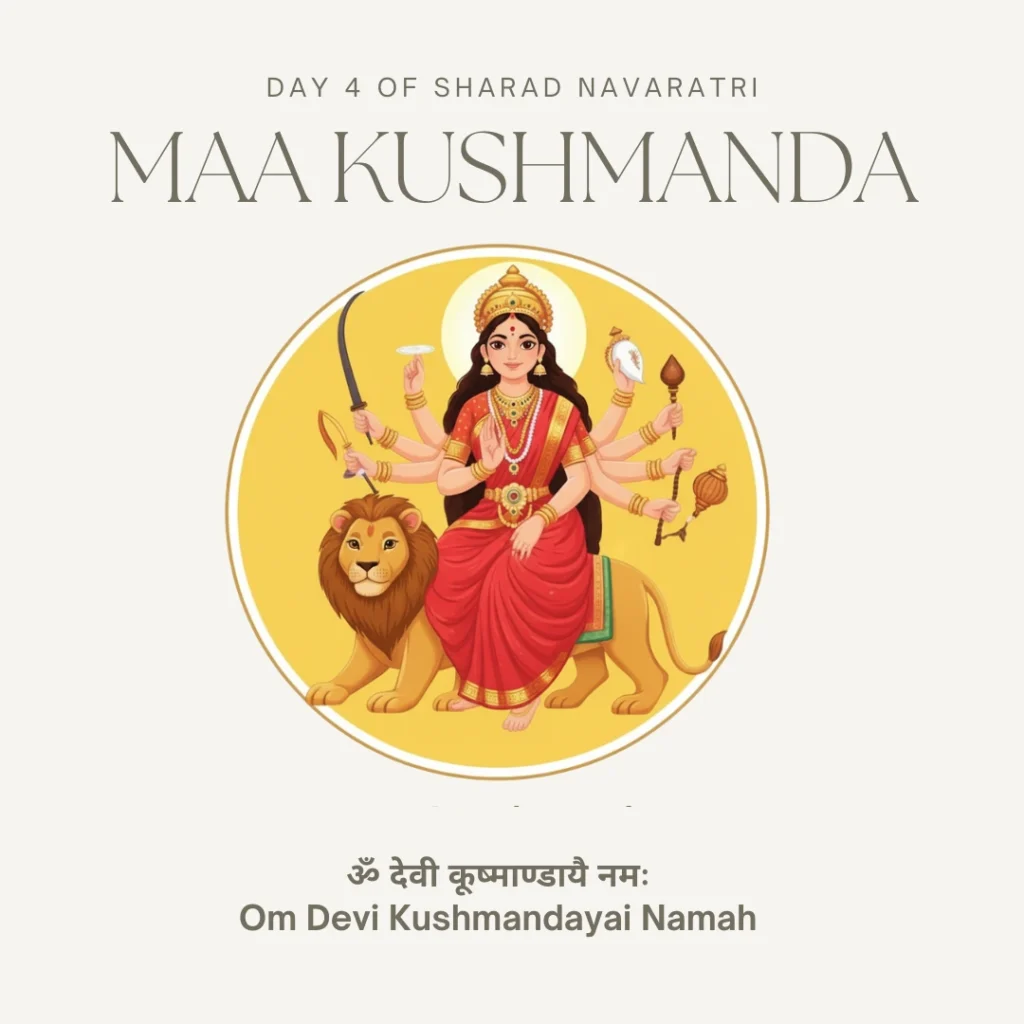
- Om Devi Kushmandayai Namah
This is the most fundamental mantra for Goddess Kushmanda, meaning:
“Salutations to Goddess Kushmanda, the creator of the universe.”
Reciting this mantra with devotion calls upon her creative energy and blessings for vitality and prosperity. - Ya Devi Sarvabhuteshu Maa Kushmanda Rupena Samsthita,
Namastasyai Namastasyai Namastasyai Namo Namah
Translation:
“To the Goddess who resides in all beings in the form of Kushmanda, I bow to her again and again.”
This shloka recognizes Kushmanda’s omnipresence and her role as the life-giving force. - Om Hreem Kooshmaandaye Jagat Prasootye Namah
This mantra means:
“Salutations to the divine Kushmanda, the source of creation of the universe.”
It is chanted to invoke her blessings for health, strength, and creativity. - Kushmanda Stotra (Excerpt)
Surasampurna Kalasham Rudhiraplutameva Cha
Dadhana Hastapadmabhyam Kushmanda Shubhadastu Me
This prayer praises Goddess Kushmanda’s benevolence and asks for her blessings to bring happiness and remove obstacles.
How to Use These Mantras
- Chant the mantra 108 times using a japa mala (rosary) to deepen concentration and devotion.
- The ideal time to chant is during Brahma Muhurta (early morning before sunrise) or during the auspicious time of the puja.
- You may accompany the chanting with lighting a ghee diya (lamp), offering fresh flowers, and meditating on the image or idol of Goddess Kushmanda.
Benefits of Chanting Kushmanda Mantras
- Invokes divine energy and cosmic light in the devotee’s life.
- Strengthens the heart chakra (Anahata), fostering love, compassion, and vitality.
- Removes fear, anxiety, and negative influences.
- Enhances creativity, intelligence, and spiritual wisdom.
- Attracts prosperity, good health, and overall well-being.
Also read about 3rd Day of Navaratri
Conclusion
Day 4 of Navratri is a celebration of Goddess Kushmanda, the source of creation, energy, and balance in the universe. Worshipping her brings health, wealth, and inner radiance, while connecting strongly with nakshatra and zodiac alignments. With proper rituals, fasting, and devotion, devotees experience deep spiritual transformation and divine blessings.
By aligning both spiritual disciplines and modern life, the essence of Navratri transcends borders, enriching lifestyles worldwide.
FAQs on Day 4 of Navratri
Q1. Who is worshipped on Day 4 of Navratri?
Day 4 of Navratri is dedicated to Goddess Kushmanda, the cosmic mother who created the universe with her smile.
Q2. What is the significance of Day 4 of Navratri?
It represents vitality, positivity, and divine creation. Worshipping on this day enhances health, prosperity, and courage.
Q3. What should be offered as bhog on Day 4?
Malpua is considered the most auspicious bhog for Goddess Kushmanda on Day 4. Fruits and sattvic items are also offered.
Q4. Which nakshatra usually influences Day 4 of Navratri?
Nakshatras like Mrigashira, Chitra, or Swati often align, influencing creativity, balance, and independence.
Q5. How does Day 4 affect zodiac signs?
Certain signs, including Aries, Libra, Scorpio, and Capricorn, experience strong positive effects such as courage, harmony, and career growth.
Q6. What are the benefits of fasting on Day 4?
Fasting promotes physical cleansing, mental clarity, spiritual positivity, and attracts divine blessings of Goddess Kushmanda.
Q7. Which chakra is associated with Goddess Kushmanda?
She is connected with the Anahata (heart chakra), representing compassion, vitality, and strength.


