


Navratri, one of the most celebrated Hindu festivals, is dedicated to the nine forms of Goddess Durga. Each day of Navratri is associated with a particular form of the Goddess, significant rituals, colors, and celestial alignments. Day 2 of Navratri holds a special place as it honors Goddess Brahmacharini, the unmarried form of Goddess Parvati known for her deep meditation and penance to win over Lord Shiva.
This day emphasizes devotion, inner strength, and endurance, urging devotees to embrace discipline in their spiritual lives. From astrological importance marked by specific nakshatras to cultural rituals performed across different regions of India, the second day of Navratri weaves together a blend of faith, tradition, and cultural richness.
In this detailed guide, we will explore everything about Day 2 of Navratri — its significance, rituals, color codes, prasad, associated nakshatras, regional variations, and tips on how devotees can observe the day with true devotion.
Significance of Day 2 of Navratri
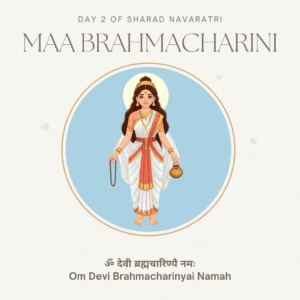
Day 2 of Navratri is dedicated to Goddess Brahmacharini, who embodies the pinnacle of devotion and perseverance. This form of the Goddess is depicted as holding a rosary (rudraksha mala) in one hand and a kamandalu (sacred water pot) in the other. Unlike other forms of Durga with weapons, Brahmacharini symbolizes peace, penance, and meditation.
- She is believed to have performed severe penance for thousands of years to attain Lord Shiva as her consort.
- Her form blesses devotees with spiritual growth, inner strength, and self-control.
- Those who worship her are freed from hardships, attain patience, and find clarity of mind.
For many, Day 2 marks the journey from external celebration to inner purification — reminding devotees to cultivate focus, discipline, and balance in everyday life.
Read here: Learn more about the Goddess Brahmacharini
 Goddess Worshipped on Day 2: Brahmacharini
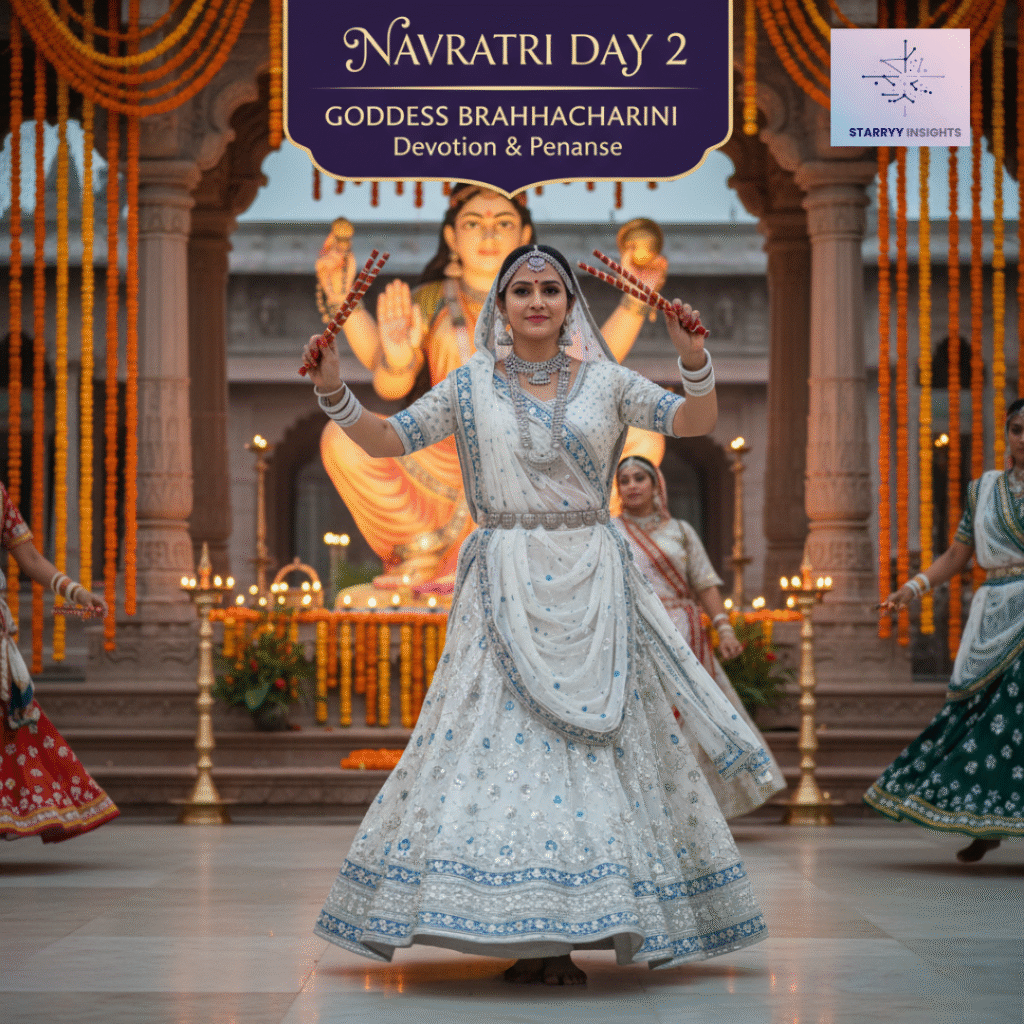 Goddess Worshipped on Day 2: Brahmacharini
On Day 2 of Navratri, the divine feminine energy is celebrated through the worship of Goddess Brahmacharini, the second form of Goddess Durga. Her name combines Brahma meaning penance and Charini meaning the female practitioner, symbolizing a goddess deeply devoted to austerity, spiritual discipline, and unwavering faith.
Significance and Symbolism
Brahmacharini represents the epitome of devotion, penance, and self-control. She is revered as the unmarried form of Goddess Parvati, who performed intense tapasya (austerities) for thousands of years to win the hand of Lord Shiva in marriage. Her form reflects purity and perseverance in spiritual pursuit.
- She is depicted as a barefoot woman wearing a simple white saree, holding a Jap Mala (rosary) in her right hand and a Kamandalu (water pot) in her left, symbolizing meditation and austerity respectively.
- Unlike other forms of Durga that are armed and fierce, Brahmacharini’s peaceful demeanor highlights strength through spiritual discipline and patience rather than force.
- She endured severe penance, subsisting on minimal food like fruits and leaves, exposing herself to harsh natural conditions, embodying extreme dedication and sacrifice.
Mythological Background
According to Hindu mythology, Brahmacharini’s penance was so powerful that Lord Shiva appeared before her disguised as a Brahmachari (celibate student) to test her resolve, hence the name Brahmacharini. Her devotion was unwavering, and she ultimately attained Shiva as her consort, symbolizing the union of divine masculine and feminine principles.
Her story teaches the transformative power of willpower, consistent effort, and inner purity. Through perseverance, one can overcome worldly temptations and distractions to attain spiritual realization.
Spiritual Essence
Worshipping Goddess Brahmacharini on Day 2 invokes her blessings for:
- Self-discipline and willpower to overcome life’s challenges.
- Patience and endurance, especially in times of hardship.
- Inner peace and mental clarity to enhance focus and resolve.
- Spiritual wisdom that guides devotees on the path of dharma.
Her energy helps devotees cultivate a balanced character, grounded in detachment from ephemeral desires but engaged with steadfast devotion and righteous action.
Contemporary Relevance
In a fast-paced modern world, Brahmacharini’s ideals inspire individuals to embrace discipline, patience, and mindfulness. Her worship encourages turning inward, nurturing mental and emotional strength, which is essential for success and fulfillment in all aspects of life.
“Discover expert astrological insights and cosmic guidance with StarryyInsights — your trusted source for aligning spiritual practices with celestial timings.”
The Rituals of Day 2 of Navratri
Performing rituals on Day 2 of Navratri has deep spiritual significance. Below are step-by-step rituals followed in most Hindu households and temples:
- Kalash Sthapana (Day 1) continues — the sacred kalash (urn) is worshipped daily during Navratri as a symbol of Goddess Durga’s energy.
- Altar Decoration – Clean the puja space and decorate it with fresh flowers, especially jasmine and marigold.
- Invocation of Brahmacharini – Devotees chant mantras and meditate before the idol or image of Brahmacharini.
- Offerings (Prasad) – Jaggery and sugar-based prasad are offered, as Brahmacharini is believed to be pleased by sweet offerings.
- Lighting the Lamp – A diya is lit to invite positivity and divine energy into the home.
- Fasting – Many devotees observe a fast by consuming fruits, milk, and satvik food, avoiding onion, garlic, and grains.
- Mantra Chanting – Reciting “Om Devi Brahmacharinyai Namah” and Durga Saptashati verses increases spiritual merit.
Key Ritual Note:
The practice of meditation on Day 2 is considered more effective as it aligns with the tapas (penance) of Goddess Brahmacharini herself.
Astrological Importance: Nakshatra and Planetary Influence
Day 2 of Navratri is astrologically significant as it honors Goddess Brahmacharini, who embodies austerity, penance, and spiritual discipline. This day is closely linked with specific nakshatras and the powerful planetary energy of Mars (Mangal), which influences courage, willpower, and determination.
Nakshatra Influence
On the second day of Navratri, the position of the moon often aligns with Chitra Nakshatra or Swati Nakshatra, both of which complement the spiritual attributes of Goddess Brahmacharini:
- Chitra Nakshatra is associated with creativity, balance, and inner focus, encouraging devotees to cultivate clarity and purity in their goals.
- Swati Nakshatra brings flexibility and adaptability, reinforcing the virtues of patience and resolve that Brahmacharini symbolizes.
This alignment amplifies the day’s energy, helping worshippers channel discipline and spiritual focus into their lives.
Planetary Influence of Mars (Mangal)
Mars, the ruling planet on Day 2, is known as the planet of energy, strength, and assertiveness. While Mars can incite impulsiveness or aggression, the worship of Brahmacharini balances these traits by converting Mars’s intense energy into calm determination and spiritual endurance.
Astrologically, this day is ideal for:
- Softening the malefic effects of Mars, especially for those with Mars-related doshas such as Manglik Dosha.
- Gaining enhanced willpower, courage, and the stamina to overcome obstacles both mundane and spiritual.
- Achieving greater mental focus, particularly beneficial for students and professionals facing competitive environments.
Worshipping Brahmacharini is believed to bring harmony to the fiery Mars energy, facilitating inner resilience and emotional stability.
Cosmic Harmony During Navratri
The astrological significance of Navratri, including Day 2, reflects a larger cosmic rhythm where divine feminine energies harmonize the influences of planets and stars to foster balance and spiritual growth. This stellar orchestration offers devotees the cosmic support needed to transform trials into triumphs through disciplined devotion.
The Color and Dress Code for Day 2
Each day of Navratri is associated with a color that carries spiritual symbolism. The color for Day 2 of Navratri is White.
- White represents purity, peace, and serenity.
- Devotees wear white attire during puja and celebrations to align themselves with the calm, penitent nature of Brahmacharini.
- Homes and temples are decorated with white flowers such as jasmine and lotus to invoke her blessings.
Food, Fasting, and Prasad on Day 2
Fasting is an integral part of Navratri, and Day 2 is no exception. It signifies devotion, self-control, and cleansing the body along with the soul.
Types of Fasts
- Nirjala Fast: Complete abstinence from water and food, observed by some staunch devotees.
- Phalahar Fast: Consumption of fruits, dry fruits, milk, and herbal drinks.
- Satvik Bhojan Fast: Devotees consume light meals without onion, garlic, or non-vegetarian food.
Recommended Foods
- Singhare ka atta (water chestnut flour) halwa or puris.
- Sabudana khichdi or kheer.
- Potato or arbi curry prepared with rock salt.
- Fresh fruits like bananas, apples, and pomegranates.
Prasad Offerings
- Jaggery, sugar, and sweets are offered to Brahmacharini.
- Many devotees prepare sugar-based delicacies as prasad to serve family and guests.
Regional Celebrations of Day 2 of Navratri
North India
- In Uttar Pradesh, Bihar, and Delhi, elaborate Durga pandals are set up. Devotees offer sugar-based prasad and chant mantras dedicated to Brahmacharini.
Gujarat
- Known for its Garba and Dandiya Raas, Day 2 sees devotees wearing white while dancing around the Goddess with great zeal.
West Bengal
- Although Durga Puja celebrations peak later, rituals on Day 2 align with invoking Goddess Brahmacharini for strength and prosperity.
South India
- Devotees prepare sundal (a dish made from chickpeas or lentils) as offerings and recite devotional chants.
Pooja and Mantras for Worshipping Goddess Brahmacharini on Day 2 of Navratri
Worshipping Goddess Brahmacharini with proper rituals and mantras is essential to invoke her divine blessings of patience, devotion, and spiritual strength. The following steps and mantras are recommended to perform the puja effectively:
- Brahmacharini Beej Mantra:
“Aim Hreem Kleem Namah” — This beej mantra helps in activating the Goddess’s energy of discipline and focus. - Gayatri Mantra for Goddess:
“Om Tatpurushaya Vidmahe Mahadevaya Dhimahi, Tanno Rudrah Prachodayat” — Invokes divine consciousness and mental clarity.
Benefits of Chanting These Mantras
- Enhances mental calmness and concentration.
- Removes obstacles and negative influences in life.
- Strengthens spiritual perseverance and self-discipline.
- Invites positive energy and divine protection.
Spiritual Benefits of Worship on Day 2 of Navratri
Worshipping Goddess Brahmacharini on Day 2 of Navratri is considered highly auspicious because she embodies penance, purity, and perseverance. Her blessings lead devotees toward inner transformation and help them progress in their spiritual and personal lives. By seeking her divine energy, one can overcome material distractions, align with self-discipline, and walk the path of truth.
Key Spiritual Benefits
- Inner Peace and Calmness
Devotees who worship Brahmacharini on Day 2 often find relief from stress, restlessness, and anxiety. Her meditative energy calms the mind, helping individuals handle challenges with composure. - Patience and Perseverance
The penance performed by Brahmacharini symbolizes unmatched patience. Worshipping her inspires devotees to face difficulties in life with endurance, without losing faith or hope. - Removal of Negativity and Obstacles
It is believed that praying to Brahmacharini removes toxic influences, anger, and impulsive tendencies. She helps devotees purify their aura, leading to spiritual as well as personal progress. - Strength for Spiritual Practices
For those engaged in meditation, yoga, or mantra chanting, Day 2 worship acts as a booster for focus and willpower. It improves concentration, making spiritual practices more fruitful. - Balance in Relationships
Mars, the ruling planet associated with Day 2, often causes aggression or conflict. By honoring Brahmacharini, devotees invite harmony, forgiveness, and better communication in relationships. - Support for Students and Learners
As Brahmacharini embodies study, penance, and dedication, students or individuals preparing for exams benefit immensely by worshipping her. They gain determination, discipline, and mental clarity. - Guidance for Life’s Journey
Symbolically, Day 2 represents the soul’s journey from material indulgence to spiritual realization. Worshippers are inspired to detach from unnecessary desires and align themselves with higher goals.
FAQs About Day 2 of Navratri
Q1. Which Goddess is worshipped on Day 2 of Navratri?
Goddess Brahmacharini, an unmarried form of Goddess Parvati known for her penance and devotion, is worshipped on Day 2.
Q2. What is the importance of Day 2 of Navratri?
It symbolizes self-discipline, perseverance, and spiritual growth. Worshipping Brahmacharini blesses devotees with calmness and focus.
Q3. What color is associated with Day 2 of Navratri?
The color is White, representing purity and peace.
Q4. Which nakshatra is linked with Day 2 of Navratri?
Day 2 commonly aligns with Chitra or Swati Nakshatra, amplifying balance and harmony.
Q5. What food is prepared on Day 2 of Navratri?
Satvik dishes like sabudana khichdi, kuttu puris, singhare halwa, and fruits are prepared along with sugar-based prasad.
Q6. Can international students celebrate Day 2 of Navratri abroad?
Yes, by setting up a small altar, performing simple puja, and engaging with local Indian communities, students abroad can celebrate meaningfully.
Q7. Which mantra is chanted on Day 2?
“Om Devi Brahmacharinyai Namah” is chanted to invoke blessings of Goddess Brahmacharini.
Conclusion
Day 2 of Navratri, dedicated to Goddess Brahmacharini, beautifully embodies the virtues of penance, patience, and unwavering devotion. As the divine symbol of self-discipline and spiritual perseverance, Brahmacharini inspires devotees to cultivate inner strength, mental clarity, and enduring faith. The rituals, colors, and astrological alignments celebrated on this day deepen the spiritual journey, empowering individuals to overcome challenges and walk steadily on the path of righteousness. Observing Day 2 with sincerity brings blessings of wisdom, courage, and harmony into one’s life, making it a pivotal day in the sacred Navratri festival cycle.
May the divine grace of Maa Brahmacharini guide every devotee towards peace and spiritual fulfillment.

