

Navratri, the nine-day Hindu festival dedicated to Goddess Durga, holds great spiritual significance across India and the world. Each day of Navratri is devoted to one of the nine forms (Navadurga) of the Goddess. Day 3 of Navratri is dedicated to Goddess Chandraghanta, the third manifestation of Durga Maa, who symbolizes strength, serenity, and courage.
On this day, devotees worship Maa Chandraghanta to attain blessings of fearlessness, harmony, and inner peace. The third day is also deeply connected with astrology, nakshatra influences, and individual horoscope readings, making it spiritually enriching and transformative. This guide will explore everything about Day 3 of Navratri — from rituals, puja timings, and traditions to nakshatra significance, planetary effects, benefits, and frequently asked questions.
Significance of Day 3 of Navratri
Day 3 of Navratri honors Goddess Chandraghanta, who is depicted wearing a half-moon on her forehead in the shape of a bell (Ghanta), which is where her name is derived from. The crescent moon signifies peace and spiritual awakening, while the bell represents the destruction of evil energies.
Worshiping Maa Chandraghanta symbolizes victory over ego, arrogance, and fear. Devotees believe that on this day, Maa grants her blessings in the form of courage, fearlessness, marital harmony, and spiritual awakening. It is also said that worshiping on this day helps devotees control anger and develop compassion.
Goddess Chandraghanta: Symbolism and Iconography
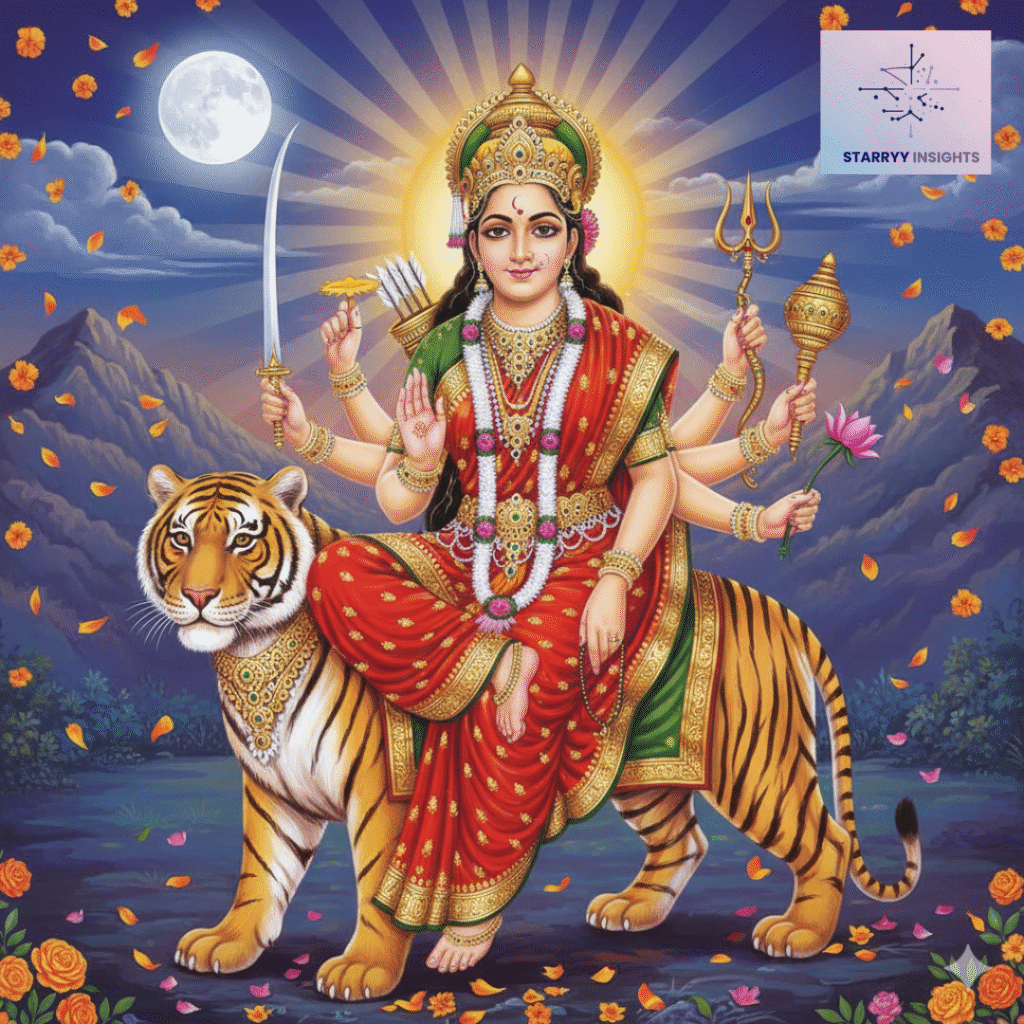
Goddess Chandraghanta, worshiped on the third day of Navratri, is a powerful and awe-inspiring form of Maa Durga. Her name is derived from the Sanskrit words Chandra meaning moon and Ghanta meaning bell. She is so named because she adorns a crescent moon on her forehead shaped like a bell. This unique bell-shaped moon is not only a distinctive feature but also symbolizes the goddess’s ability to dispel negative energies and evil forces through its resonating sound, which stuns demons and creates an aura of divine protection.
Physical Depiction and Symbols
Maa Chandraghanta is depicted with ten hands, each holding different weapons and symbolic items that denote her powers, virtues, and qualities as a warrior and protector:
- Trishula (trident): Symbolizes the destruction of evil and the three gunas (qualities) of nature—sattva (purity), rajas (activity), and tamas (inertia).
- Gada (mace): Represents strength and authority.
- Khadak (sword): Denotes knowledge and the sharpness of intellect.
- Bow and arrow: Symbolize energy, focus, and readiness to fight negativity.
- Kamandalu (waterpot): Signifies purity and spiritual power.
- Lotus flower (kamala): Represents purity, spiritual awakening, and divine beauty.
- Bell (Ghanta): The bell’s ring is believed to drive away evil spirits and symbolize the cosmic sound that creates harmony.
- Japa mala (rosary): Indicates devotion, spirituality, and meditation.
- One hand is often shown in Abhaya Mudra (gesture of fearlessness and protection), assuring devotees of her blessings and protection.
- Another hand shows Varada Mudra (gesture of granting boons and compassion).
Her golden complexion reflects her radiant energy and divine nature, symbolizing prosperity and enlightenment.
Mount and Weapons: The Tiger or Wolf
Goddess Chandraghanta rides a tiger or a lion, which signifies courage, power, and determination. The tiger is a symbol of raw energy and fearless action, showing that the goddess commands strength and force to destroy evil. Some texts refer to her mount as a wolf, which also embodies bravery.
The Third Eye and Crescent Moon
Chandraghanta’s third eye remains open, symbolizing her constant vigilance and ability to see beyond the apparent, representing awakening consciousness that destroys ignorance and evil. The crescent moon on her forehead resembles a bell and indicates the harmonious rhythm of the universe. It also symbolizes calmness, serenity, and the cyclical nature of life. The bell-shaped moon points to the balance between sound and silence, action and stillness.
Dual Nature: The Warrior and the Nurturer
One of the most profound aspects of Goddess Chandraghanta’s iconography is the fusion of fierceness and gentleness. Despite her warrior form, equipped with weapons ready to battle evil, she embodies motherly qualities—compassion, protection, and caring for her devotees. This duality shows that strength does not contradict kindness; instead, true power arises from balance.
Her bell’s sound reflects healing vibrations, dispelling fear and negativity, while her demeanor radiates peace and hope. Devotees perceive her both as a fierce protector against evil and a benevolent divine mother who nurtures and supports.
Representation of Shakti and Feminine Divine Energy
Chandraghanta epitomizes the cosmic feminine energy (Shakti), representing the dynamic power necessary to uphold righteousness and justice. She is a manifestation of Divine Feminine strength, blending beauty, courage, and justice. Honoring her during Navratri not only reinforces spiritual growth but also highlights the importance of feminine power in the cosmic and social order.
Spiritual and Psychological Symbolism
- The bell (Ghanta) symbolizes the cosmic sound that destroys negative energies both within (fear, anger) and without (evil spirits).
- Her weapons represent different facets of life’s challenges, and her ability to master them symbolizes the power of mindfulness and courage.
- Riding a ferocious animal denotes the triumph of the spirit over material obstacles and internal fears.
In sum, Goddess Chandraghanta’s iconography is a rich tapestry of symbols teaching devotees about the balance of power and compassion, the destruction of negativity, spiritual awakening, and standing fearlessly against injustice.
Read more about Maa Chandraghanta here
Rituals and Puja Vidhi for Day 3 of Navratri
Worship on Day 3 follows specific Navratri puja rituals to invoke the blessings of Maa Chandraghanta.
- Kalash Sthapana and Sankalp: Begin by establishing the Kalash (sacred pot) if not already done on Day 1 and take a vow (sankalp) with devotion.
- Cleanse the Puja Area: Purify the place with Ganga jal and light a lamp.
- Picture/Idol of Chandraghanta: Place the idol or image of Goddess Chandraghanta in the altar.
- Offerings: Offer flowers (especially red flowers), fruits, sweets (malpua, kheer), and milk-based offerings.
- Mantra Recitation: Chant Maa Chandraghanta’s mantras, stotras, and Durga Saptashati.
- Popular mantra: “Om Devi Chandraghantayai Namah” (108 times).
- Bell Ringing: Ringing bells during the puja is considered auspicious to remove negative energies.
- Aarti and Bhajans: Perform Navratri aarti and sing devotional bhajans dedicated to the Goddess.
Special Food Offering: On Day 3, it is customary to offer milk, kheer, or sweets made of milk to the goddess, believed to bless devotees with serenity and strength.
Mantra for Worshipping Goddess Chandraghanta
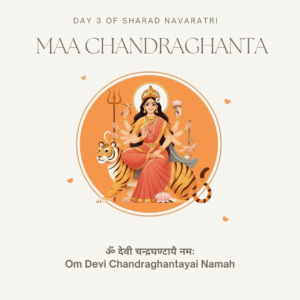 Chanting mantras dedicated to Maa Chandraghanta is an important part of the Day 3 Navratri rituals. The powerful vibrations of these mantras are believed to invoke her divine blessings for courage, protection, and mental clarity.
- The most popular and effective Chandraghanta Mantra is:
“Om Devi Chandraghantayai Namah”
(ॐ देवी चंद्रघण्टायै नमः) - A longer invocation often recited during her worship is:
“Pindajapravararudha Chandakopastrakairyuta, Prasadam Tanute Mahyam Chandraghanteti Vishruta” - Another devotional hymn is:
“Ya Devi Sarvabhuteshu Maa Chandraghanta Rupena Samsthita, Namastasyai Namastasyai Namastasyai Namo Namah”
These mantras chanted 9, 27, 45, or 108 times with devotion purify the mind, dispel fear, and awaken the inner power to face life’s challenges. It is ideal to chant facing north or east, preferably early morning during the Navratri period.
The mantra’s rhythmic sound resembles the bell (ghanta) on her forehead, believed to remove negativity and bring harmony. Regular chanting fosters spiritual strength, emotional balance, and steadfastness.
Nakshatra Influence on Day 3 of Navratri
Nakshatras (lunar constellations) play an important role in Navratri rituals. The nakshatra on Day 3 of Navratri often determines the timing of puja and the spiritual impact of worship.
- If Day 3 coincides with Rohini Nakshatra, it enhances prosperity and marital happiness.
- Mrigashira Nakshatra on Day 3 is believed to bring peace, creativity, and clarity of mind.
- Devotees are encouraged to check the Panchang (Hindu calendar) for the nakshatra and tithi before performing puja for maximum benefits.
Astrologically, Day 3 is highly favorable for worship, as Goddess Chandraghanta’s blessings align with spiritual disciplines as well as practical life goals.
Horoscope and Planetary Effects on Day 3 of Navratri
The horoscope connection on Day 3 of Navratri is linked to the ruling planet and zodiac influence of Goddess Chandraghanta.
- Planetary Association: Maa Chandraghanta is associated with Venus (Shukra), the planet of love, comfort, and material wealth.
- Zodiac Benefits:
- Aries: Success in career and enhancement in leadership qualities.
- Taurus: Relief from financial stress and family issues.
- Gemini: Boost in creativity and improved communication.
- Cancer: Protection against negativity and strengthening of relationships.
- Leo: Increased confidence, prosperity, and recognition.
- Virgo: Healing from mental stress and clarity in decision making.
- Libra: Enhanced harmony in relationships, balancing of personal life.
- Scorpio: Emotional stability and protection from hidden enemies.
- Sagittarius: Wisdom, spiritual advancement, and marital bliss.
- Capricorn: Business success and career growth.
- Aquarius: Expansion in new ventures and creative ideas.
- Pisces: Spiritual peace, intuition, and emotional healing.
Performing puja according to one’s horoscope helps attract maximum astrological benefits.
“For a detailed horoscope analysis and planetary influences related to Day 3 of Navratri and Goddess Chandraghanta’s blessings, visit StarryInsights for personalized zodiac predictions and spiritual guidance.”
Benefits of Worshiping on Day 3 of Navratri
The benefits of Day 3 of Navratri revolve around emotional, spiritual, and material well-being. Devotees experience several blessings:
- Spiritual Benefits
- Awakening of inner consciousness.
- Removal of negativity and evil forces.
- Strength to face obstacles with courage.
- Psychological Benefits
- Brings mental peace and serenity.
- Reduces anger and stress.
- Enhances clarity of thought and focus.
- Material Benefits
- Brings wealth, prosperity, and success in business ventures.
- Ensures harmony in marital and family relationships.
- Strengthens Venus’ planetary influence, leading to luxury and comfort.
- Health Benefits
- Milk offerings symbolize physical strength and vitality.
- Reduces anxiety and improves overall health when performed with dedication.
Cultural Observance of Day 3 of Navratri
Day 3 rituals vary slightly across regions in India:
- North India (Uttar Pradesh, Delhi, Punjab): Devotees prepare milk-based sweets and conduct grand aartis with bells.
- Western India (Gujarat, Maharashtra): Garba and Dandiya dances celebrate the energy of Goddess Chandraghanta.
- Eastern India (West Bengal, Odisha, Bihar): Special pujas are held with Durga Saptashati recitation.
- Southern India (Tamil Nadu, Andhra Pradesh): Spiritual discourses and chanting sessions are conducted in temples.
Day 3 of Navratri and Kanya Puja Connection
While Kanya Puja is usually observed on the 8th or 9th day, devotees also honor young girls symbolically representing Maa Chandraghanta on Day 3 in some regions. Offerings of sweets, fruits, and gifts to young girls are performed, symbolizing the nurturing energy of the Goddess.
How to Meditate on Day 3 of Navratri
Apart from rituals, meditation is highly recommended:
- Sit in a quiet space facing east.
- Envision the image of Maa Chandraghanta with a crescent moon and radiant golden aura.
- Chant the beej mantra “Om Aim Hreem Kleem Chamundayai Vichche” or simply her name.
- Focus on the Anahata Chakra (Heart Chakra), associated with compassion and healing.
Meditation aligns the devotee’s energy with the divine form of the Goddess, promoting peace and strength.
Modern-Day Relevance of Day 3 of Navratri
In today’s stressful lifestyle, Day 3 of Navratri holds deep meaning beyond rituals:
- Promotes mental wellness through meditation and mantra chanting.
- Encourages family bonding with collective celebrations.
- Reminds individuals to find balance between material gains and spiritual growth.
- Serves as a cultural bridge connecting the Indian diaspora worldwide.
FAQs on Day 3 of Navratri
Q1. Which Goddess is worshiped on Day 3 of Navratri?
Day 3 is dedicated to Goddess Chandraghanta, the third form of Maa Durga.
Q2. What is special about Goddess Chandraghanta?
She symbolizes courage, power, and tranquility, depicted with a crescent moon (ghanta) on her forehead.
Q3. What food is offered on Day 3 of Navratri?
Milk, kheer, and sweets made with milk are offered as prasad.
Q4. What are the nakshatra effects on Day 3 of Navratri?
Rohini Nakshatra promotes marital bliss, while Mrigashira enhances creativity and calmness when aligned with this day.
Q5. How does Day 3 of Navratri affect horoscope readings?
It is strongly influenced by Venus, bringing prosperity, love, and comfort according to one’s zodiac sign.
Q6. What are the benefits of Day 3 worship?
Worship removes negativity, enhances relationships, brings prosperity, and promotes peace of mind.
Q7. Can non-vegetarians participate in Day 3 rituals?
Yes, but devotees are encouraged to follow a sattvic (pure vegetarian) diet during Navratri for spiritual purity.
Q8. Is meditation necessary on Day 3 of Navratri?
Meditation is highly encouraged as it enhances the spiritual benefits and aligns the mind with the Goddess’s energy.
Conclusion
Day 3 of Navratri, dedicated to Goddess Chandraghanta, beautifully blends the energies of courage, peace, and divine protection. Worshiping her not only helps devotees conquer fear and negativity but also inspires inner strength and spiritual awakening. With her calming crescent moon and powerful ten-armed form, Maa Chandraghanta symbolizes the perfect balance between fierceness and compassion. Observing the rituals, embracing nakshatra and horoscope guidance, and partaking in the festivities bring numerous mental, emotional, and material benefits. Day 3 encourages all to face life’s challenges fearlessly while nurturing harmony within and around us.